In June 2026, a home in incorporated Wickenburg spent a median of 152 days on the market before selling. Eighteen miles up the road in unincorporated Congress, that number was 237 days. Both towns sit in the same high desert, share the same US 60/93 corridor, and draw the same kind of buyer: someone who wants land, quiet, and a mountain view without a metro commute. The price gap doesn't explain the difference. Congress actually runs slightly cheaper than the national average, not dramatically so. One difference for some Congress transactions is the disclosure paperwork required for sales in unincorporated areas.
The Disclosure Required for Some Congress Sales
Buy a home inside Wickenburg's town limits and your closing paperwork looks like closings anywhere else in Arizona. Buy a parcel in unincorporated Congress and Arizona law adds a document most transplants have never seen: the Affidavit of Disclosure required under A.R.S. § 33-422. Any seller offloading five or fewer parcels of unsubdivided land in an unincorporated part of a county has to complete one, hand it to the buyer, and record it alongside the deed itself. It isn't optional and it isn't boilerplate. It's a sworn statement, in twelve-point type, that walks through the specific risks of rural land ownership one line at a time.
The form asks about legal access, physical access, whether those two are the same thing, who maintains the road, water rights, septic status, flood zone data, and whether the property sits near a military installation's influence area. Two of the very first lines on that affidavit read almost exactly like this:
There ☐ is ☐ is not legal access to the property... There ☐ is ☐ is not physical access to the property... The legal and physical access to the property ☐ is ☐ is not the same.
Three separate checkboxes, three separate questions, because in unincorporated Arizona the answer to all three is genuinely not guaranteed to match.
Two Kinds of Access, One Word Buyers Assume
Most buyers touring a property assume access is a single, settled fact: there's a driveway, therefore there's access. The affidavit exists because that assumption fails often enough in rural Yavapai County to require a sworn statement about it.
Legal access means the property has a recorded easement or a legally established right to reach a public road. Physical access means there's an actual, usable route you can drive on today. A parcel can have one without the other. A landowner might hold a paper easement across a neighbor's property that was never graded into a real road, or a well-worn dirt track that everyone uses but that was never formally granted. Either mismatch becomes a disclosure item, and either one is the kind of thing a buyer's lender or title company will want resolved before funding a loan.
The form goes further. The affidavit also addresses whether emergency vehicles can reach the property.
What Yavapai County Will and Won't Fix
Yavapai County's Public Works department maintains roughly 1,600 miles of county road, split almost evenly between paved and unpaved surfaces. That even split matters for Congress buyers, because it means a substantial share of the roads leading to rural parcels are graded dirt, not asphalt, and county maintenance on those roads is scheduled work, not a guarantee tied to any individual property.
Congress has seen real investment. In spring 2024, Yavapai County had Earth Resources Corporation repave Ghost Town Road and Chittenden Road with a full asphalt overlay, shoulder work, and new striping. That's the kind of project that improves a corridor for years. But a paving project on one named road doesn't change the maintenance status of every private drive branching off it. The affidavit's road-maintenance line exists precisely because "the road out front got repaved" and "my road is publicly maintained" are two different facts
The Road Maintenance Agreement Line
The affidavit doesn't stop at asking whether a road is maintained. It asks whether that road is publicly maintained, privately maintained, or not maintained at all, and if privately maintained, whether there's a recorded road maintenance agreement among the property owners who share it. The form also addresses road maintenance.
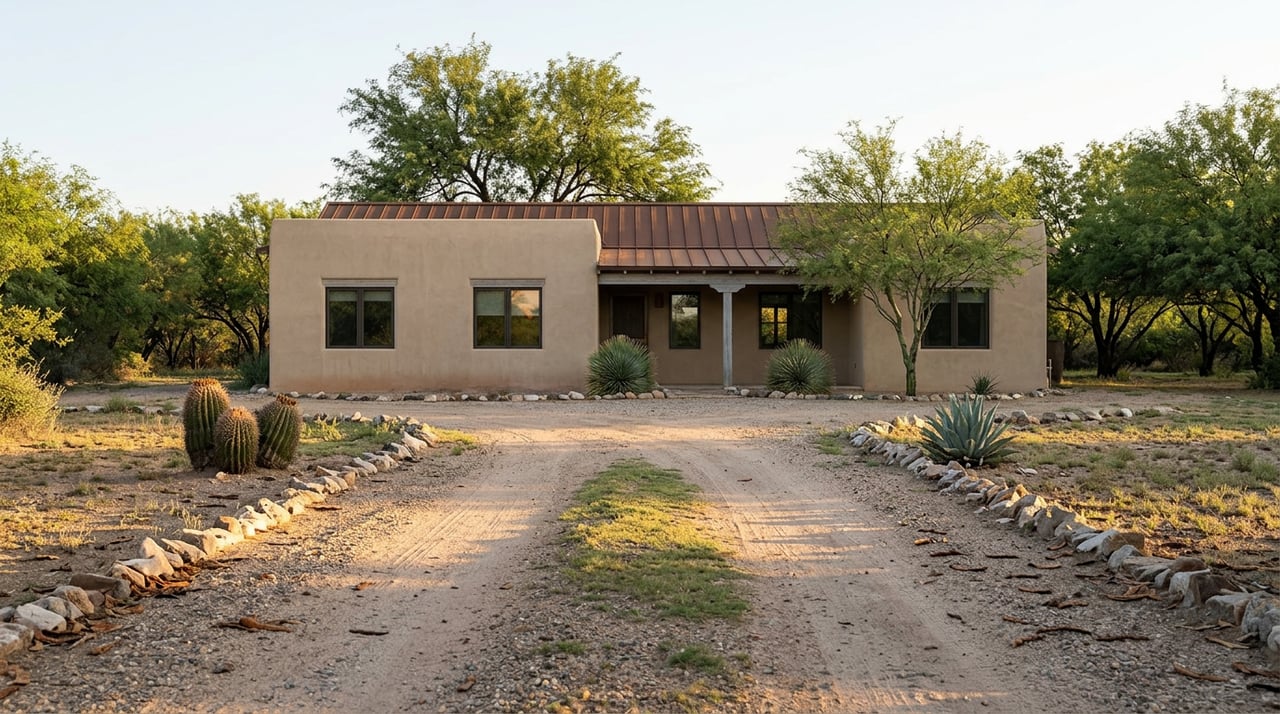
This is exactly the situation for a meaningful slice of Congress's inventory. Listings for the Paso Del Sol area of Congress, for instance, are marketed as having no HOA. Without an HOA or recorded road-maintenance agreement, neighbors may need to coordinate grading after monsoon-season washouts; that coordination happens informally, or it doesn't happen at all.
| Market | Median list price, June 2026 | Median days on market, June 2026 |
|---|---|---|
| Wickenburg (incorporated) | $542,000 | 152 |
| Congress (unincorporated) | $409,000 | 237 |
The 85-day gap in that table is the part worth sitting with. Congress buyers may also need to work through access and road-maintenance questions as part of a transaction.
The Five-Day Rescission Period
Once a seller furnishes the affidavit, Arizona law gives the buyer five days to rescind the contract, no penalty, no explanation required. That right exists specifically because the disclosures inside the affidavit can change a buyer's calculus after they've already fallen for the house. A buyer who learns mid-contract that physical access doesn't match legal access, or that there's no recorded maintenance agreement on a private road, now has a real decision to make, and five days to make it.
In practice, this rarely kills a deal outright. More often it triggers a pause: a call to a surveyor, a conversation with the lender about whether the loan program will still fund on that access, a renegotiation of price to account for grading a driveway or formalizing an easement. Those steps can add time to an individual transaction. The table, however, reports the market-wide difference, not the time attributable to any one step.
What This Means If You're Buying or Selling in Congress
If you're buying:
- Ask about legal access and physical access as two separate questions before you write an offer, not after you receive the affidavit
- Ask specifically whether there's a recorded road maintenance agreement if the road serving the property is private
- Confirm with your lender early whether your loan program has requirements around access surfaces, since this can affect timeline more than it affects approval
If you're selling:
- Order any access documentation, surveys, or maintenance agreement copies before you list, not after an accepted offer
- Be precise on the affidavit rather than checking "unknown" out of convenience. A vague disclosure invites more buyer questions, not fewer
- Expect the five-day rescission window to be part of your timeline and build it into how you communicate with your buyer's agent
Quick Answers
Does this affidavit apply to a resale inside Wickenburg's town limits? No. A.R.S. § 33-422 applies specifically to land in unincorporated areas of a county. Property inside Wickenburg's incorporated boundary follows the standard seller disclosure process instead.
What if the seller genuinely doesn't know the answer to an access question? The form has an "unknown" checkbox for that reason. It's honest, but it signals to a buyer that more due diligence may be needed before closing, which can add time to an individual transaction.
Can I still get financing if the road isn't publicly maintained? Often yes, but it depends on the lender and loan program. This is worth confirming with your lender at the pre-approval stage rather than discovering it mid-contract.
Congress offers buyers room to spread out and a real sense of privacy. Buyers and sellers alike can consider access and road-maintenance details alongside the home itself. If you're weighing a purchase or a sale in Congress, Wickenburg Ranch, or anywhere else in the Wickenburg area and want someone who already knows which questions the affidavit is really asking, Wendy Wright has spent her career in these exact transactions. Get Your Instant Home Valuation, or reach out to start the conversation before the paperwork does.
This article is general information, not legal, tax or financial advice. Consult a qualified professional about your situation.