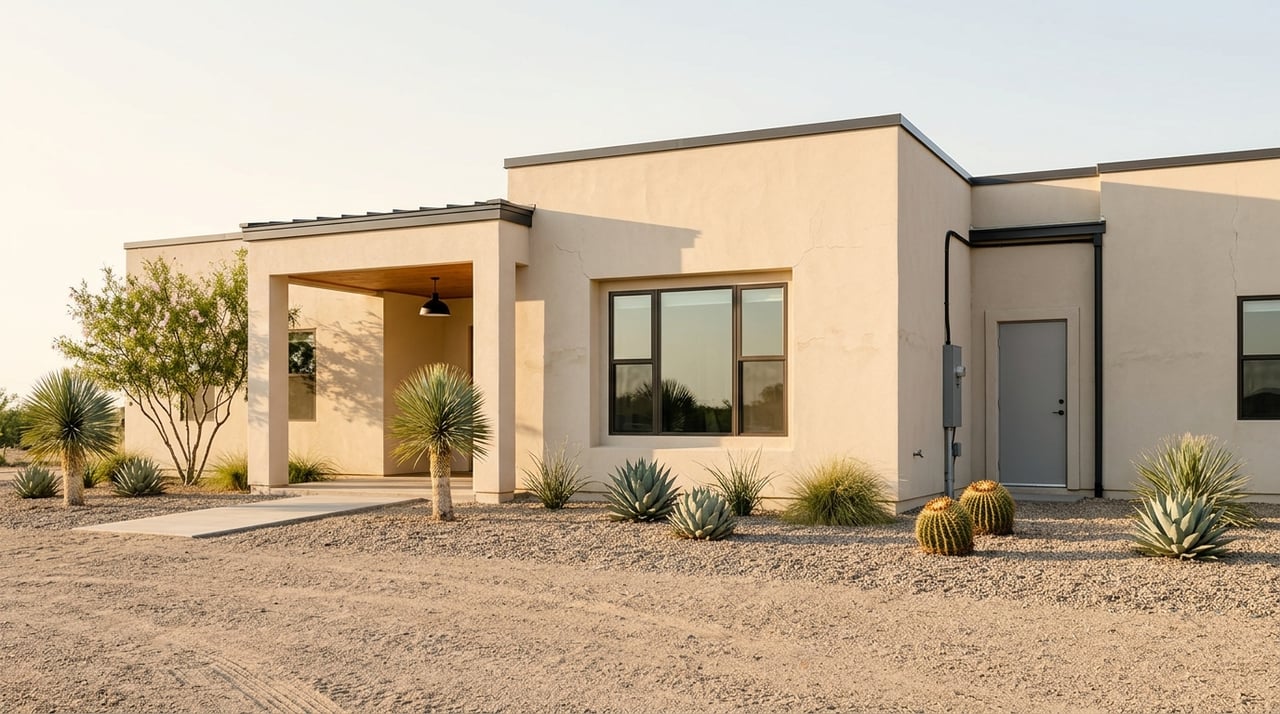
Thinking about buying in Morristown? It can be a great fit if you want more land, more privacy, and a rural Arizona lifestyle, but it is also a market where the details matter. A property here may look simple at first glance, yet things like zoning, water source, septic, and road access can shape how you use the land and what your day-to-day life feels like. If you want to buy with confidence, it helps to know what sets Morristown apart before you start writing offers. Let’s dive in.
Morristown Is a Rural Maricopa County Market
One of the first things to know is that Morristown should be treated as a rural Maricopa County market. County records describe it as an unincorporated census-designated place about 50 miles northwest of Phoenix at the junction of SR 74 and US 60.
That matters because the area is shaped more by county land-use patterns than by a suburban city layout. You are not shopping in a typical tract-home setting with uniform lots, sidewalks, and nearby commercial centers.
County planning materials place Morristown in a very low-density framework. In nearby cases, that includes Rural Densities of 0 to 1 dwelling unit per acre and RU-43 zoning, with county reports describing large stretches as mostly vacant, unimproved desert.
Expect Space, Privacy, and Open Land
Morristown is often associated with horse property, privacy, and open space. County filings and resident comments consistently reflect a preference for low-density living rather than subdivision-style development.
For many buyers, that is the draw. You may find acreage, desert views, room for outbuildings, and a quieter setting than you would in a more built-out area.
It also means neighboring properties may vary widely in size, improvements, and use. One parcel may have a home, fencing, and horse setup, while the next may be vacant land with very limited infrastructure.
Property Types Can Vary More Than You Think
The dominant pattern in Morristown is rural-residential. Buyers are more likely to encounter acreage, vacant land, horse properties, and scattered single-family homes than a standard suburban mix.
At the same time, Morristown is not completely uniform. County records in the broader Morristown and Circle City area also show more conventional platted residential development, including single-family homes on smaller lots.
That is why you should avoid assumptions based on one listing or one street. Two properties in the same general area can offer very different zoning, lot dimensions, utility setups, and use options.
What to verify before you buy
Before you move forward on a property, make sure you confirm:
- Lot size
- Zoning
- Road frontage and legal access
- Utility access
- Current setup for horses
- Space for RVs, shops, or other rural uses
These are not small details in a market like Morristown. They can affect both your immediate plans and the long-term value of the property for your lifestyle.
Horse Use Is Part of the Local Context
If you are shopping for horse property, Morristown deserves a closer look. Maricopa County zoning rules explicitly allow corrals for unattended horses in residential districts, which supports the area’s equestrian character.
That does not mean every property is automatically ready for horses. A parcel may still need the right layout, usable land, fencing, access, and water setup to work well for your needs.
If horses are part of your plan, it helps to look beyond the home itself. You will want to evaluate how the full property functions day to day, including turnout space, trailer access, and the practical use of the land.
Water Should Be a Top Due-Diligence Item
In rural areas, water is one of the most important things to verify early. Morristown Water Company is listed by the Arizona Department of Environmental Quality as a groundwater-based system in Maricopa County with 67 service connections and a combined distribution population of 131.
That tells you there is a local water system serving some properties, but not every parcel will necessarily be connected to it. You need to confirm the actual water source for the specific property you want to buy.
Some homes or land may rely on a private well instead. In those cases, the details become even more important.
If the property has a private well
Arizona Department of Water Resources guidance says wells must be at least 100 feet from septic tanks, sewage disposal areas, landfills, hazardous-waste facilities, and certain fuel-storage areas.
For domestic use on parcels of 5 acres or fewer, the county or local health authority must review the well application before it goes to the state. The Arizona Department of Health Services also recommends testing new well water for arsenic, fluoride, lead, nitrates, total coliform bacteria, total dissolved solids, and uranium.
Water documents to request
For a rural purchase, ask for:
- Well log or water-provider confirmation
- Any available water test results
- Shared-well agreements, if applicable
- Haul-water agreements, if applicable
These records can help you understand not just where the water comes from, but how the property is set up for ongoing use.
Septic Matters Just as Much
Sewer service is not something you should assume in Morristown. Maricopa County Environmental Services handles water, wastewater, stormwater, and waste permits in the county, and county building review requires verification of a sewage disposal system through either a septic permit filing or a sewer provider agreement.
In practical terms, many rural buyers need to pay close attention to the septic system. If a home has an existing septic setup, you will want to review permits and inspection history whenever available.
If you are buying vacant land, you should understand what will be needed before building plans move too far. Septic and well placement can affect where improvements can go on the property.
Access Is Largely Highway-Based
Morristown access is centered on US 60 and SR 74. That highway connection is a key part of daily life in the area, whether you are commuting, running errands, or heading to nearby services.
The importance of that route is reflected in transportation work as well. ADOT completed a pavement rehabilitation project on US 60 between Wickenburg and Morristown in spring 2026.
This is a drive-dependent market. If you are moving from a more suburban or urban setting, that shift in lifestyle is worth thinking through before you buy.
Daily Life Usually Means Driving for Services
A county zoning narrative noted that there were no commercial services in Morristown. That is a strong indicator that the area functions primarily as a rural residential community rather than a service center.
For many buyers, that tradeoff is worth it. You get more elbow room and a quieter setting, but you should expect to drive for groceries, appointments, and many routine needs.
Regional commute data from MAG also supports that pattern. The nearby Wickenburg US 60 and US 93 area is modeled as a 45-minute weekday morning inbound commute shed with 1,854 employers and 31,910 jobs.
What that means for buyers
Morristown may be a strong fit if you want:
- Rural living
- Open space
- Privacy
- Equestrian potential
- More land-oriented options
It may be a weaker fit if you want:
- Walkable errands
- Nearby shopping clusters
- A typical suburban neighborhood feel
- Services right outside your front door
Wickenburg Is the Practical Nearby Hub
For many Morristown residents, Wickenburg is the closest practical service hub. The town says it offers electric service in some areas, along with water, sewer, and sanitation services.
Wickenburg also provides a range of everyday amenities and community resources that can support rural living nearby. That can make a big difference if you like the space of Morristown but still want access to services within a reasonable drive.
Nearby services buyers may value
Wickenburg Community Hospital and Clinics provide primary care, emergency care, surgical services, rehabilitation services, an infusion center, a breast center, telestroke, and regenerative medicine.
The Wickenburg Public Library offers more than 42,000 items, public internet access, computers and laptops, and regular programs. The town also maintains parks and trails, including a 2.8-mile paved multi-use path along US 60, plus additional parks and trailheads.
The Bottom Line Before Buying in Morristown
Morristown can be a great place to buy if you want a rural Arizona property with room to breathe. Its character is shaped by low-density planning, horse-property potential, scattered development, and a lifestyle that depends more on land and access than on nearby suburban convenience.
The key is to do careful property-level homework. In Morristown, details like zoning, water source, septic permits, legal access, and land usability are not side notes. They are central to making a smart purchase.
If you are considering Morristown, working with a local agent who understands horse properties, acreage, and rural due diligence can make the process much smoother. When you are ready to talk through your goals, connect with Wendy Wright for practical guidance tailored to this part of northwest Maricopa County.
FAQs
What is Morristown like for homebuyers?
- Morristown is a rural Maricopa County market known for low-density living, open space, privacy, and horse-property potential rather than a typical suburban neighborhood pattern.
What property types are common in Morristown?
- Buyers commonly find acreage, vacant land, horse properties, and scattered single-family homes, though some smaller-lot residential development exists in the broader area.
What should buyers verify about water in Morristown?
- Buyers should confirm whether a property is served by Morristown Water Company or a private well, and request well logs, provider confirmation, water test results, and any shared-well or haul-water agreements.
What should buyers know about septic in Morristown?
- Buyers should verify the sewage disposal setup through septic permit records or a sewer provider agreement, and review available septic inspection history when purchasing an existing home.
Is Morristown convenient for shopping and errands?
- Morristown is generally drive-dependent, and county records indicate there are no commercial services in the community, so many buyers rely on nearby hubs like Wickenburg for services and amenities.
Is Morristown a good fit for horse property buyers?
- Morristown can be a strong option for horse property buyers because local land-use patterns and county zoning support equestrian-oriented rural living, though each parcel still needs individual review for layout, access, water, and usable land.