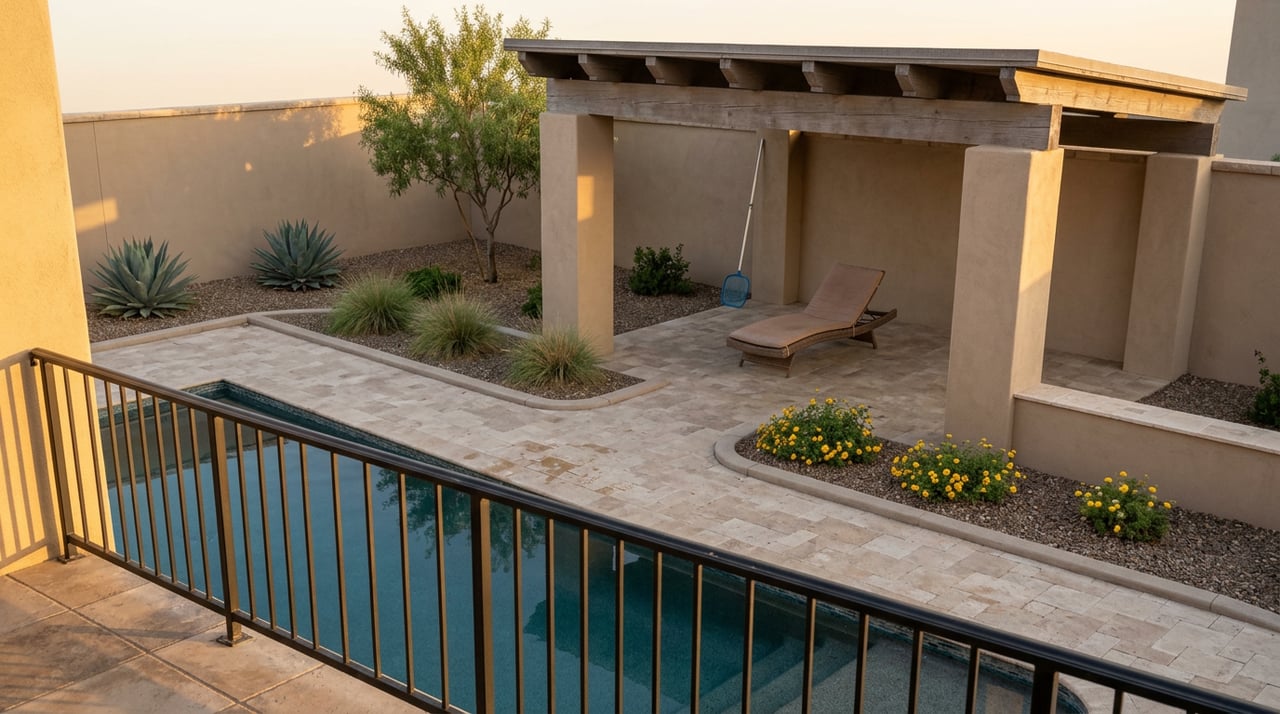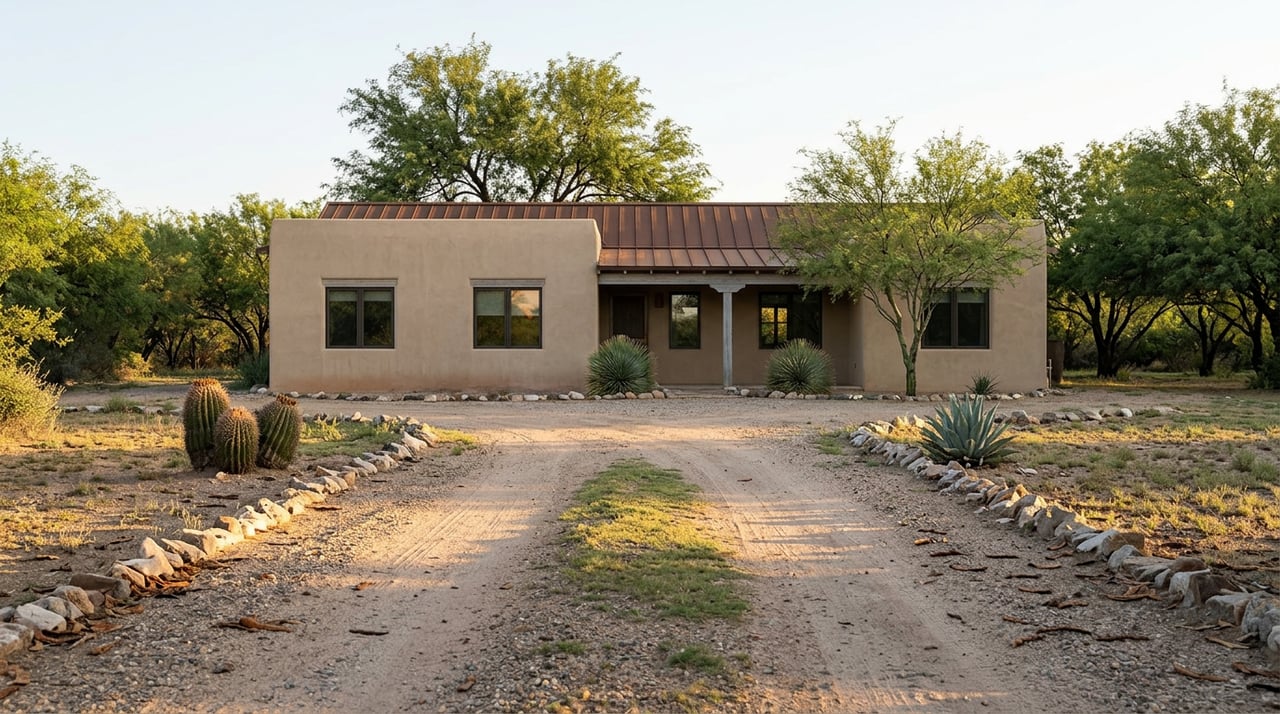
Two buyers are looking at nearly identical properties on the north side of town. Same rough acreage, same style of home, same asking price within a few thousand dollars, same drive time to the historic downtown core. One buyer closes and finds a fenced arena on the property is fully permitted. The other closes and learns the arena needs a special use permit before it can be used for lessons or events. Same town. Same zip code. Different county.
Wickenburg's 85390 footprint is not one jurisdiction wearing one name. It is two counties stitched together at a line that sits roughly a mile north of downtown, according to the Wickenburg Chamber of Commerce's visitor guide. South of that line is Maricopa County. North of it, including all of Wickenburg Ranch, is Yavapai County. The split shows up nowhere on a listing sheet, and it changes what a buyer pays at the register, how their property gets assessed, and what they're allowed to build on acreage.
That's the piece most buyers researching "Wickenburg real estate" never find, because most guides describe Wickenburg as a single market with a single median price. It isn't. It's two regulatory environments that happen to share a name, a school district, and a downtown.
Where the Line Actually Falls
A local market report covering the 85390 zip code as of August 2026 puts the split at roughly 73 percent Maricopa County and 27 percent Yavapai County by parcel count. Wickenburg Ranch itself sits entirely inside the Yavapai County portion, which surprises buyers who assume the master-planned community and the surrounding acreage market operate under one county's rules. They don't. Step off the Ranch and onto an outlying horse property a few hundred yards south, and you may have crossed back into Maricopa County without ever leaving what everyone locally calls Wickenburg.
This matters because county government, not the Town of Wickenburg, controls the two things that shape a rural property's usable value most: the tax rate applied to purchases and the zoning rules that decide whether that back acreage can hold an arena, a boarding operation, or just a couple of personal horses.
The Half-Cent Difference at the Register
The Town of Wickenburg's own tax office draws the line in plain numbers. The general Transaction Privilege Tax, Arizona's version of sales tax, runs 8.5 percent within the Maricopa County portion of town and 8.55 percent within the Yavapai County portion, a rate structure the Town has published since a 2009 update to its tax code.
Real estate closings themselves aren't subject to that tax. Where it lands is everywhere around the purchase: the fencing materials for a new corral, the flooring for a remodel, the truck or trailer bought locally to haul feed. For a buyer furnishing a home or building out horse infrastructure after closing, a few thousand dollars in taxable purchases adds up differently depending on which side of that mile-north line the driveway sits on.
Two Assessors, Two Calendars
Property tax administration splits the same way. Arizona's statewide assessment math doesn't change: full cash value multiplied by a 10 percent assessment ratio for residential property, per the Town's published formula. What changes is who calculates that value and when the notice arrives. On the Maricopa County side, the county's own assessor's office sets full cash value and mails its notices on its own schedule. On the Yavapai County side, Yavapai's assessor runs an independent valuation process, with assessment notices typically reaching mailboxes by mid-March.
Two neighbors a mile apart, both closing on similar homes the same month, can receive their first tax notice from two different county offices, calculated on two different timelines, with no coordination between them. Neither notice will explain why. The line simply runs where it runs.
The Same Table Compressed
| Maricopa County side | Yavapai County side | |
|---|---|---|
| General sales tax (TPT) | 8.5% | 8.55% |
| Assessment ratio | 10% of full cash value | 10% of full cash value |
| Assessing authority | Maricopa County Assessor | Yavapai County Assessor |
| Agricultural zoning exemption threshold | 5 contiguous "commercial acres" (about 4 standard acres) | Separate exemption process, reviewed independently |
| Sheriff jurisdiction | Maricopa County Sheriff's Office | Yavapai County Sheriff's Office |
The Acreage Threshold That Isn't What It Sounds Like
For the equestrian and acreage buyers this market attracts, the zoning difference is the one with the most financial weight. Maricopa County's zoning ordinance defines the threshold for an agricultural use exemption in a unit most buyers have never encountered.
"grazing or general agricultural purposes, if the tract/s concerned is/are five or more contiguous commercial acres in size"
That's straight from Maricopa County's zoning ordinance. A "commercial acre" in this context is 35,000 square feet, not the standard 43,560 square foot acre most people picture. Five commercial acres works out to roughly four standard acres. So a Maricopa County buyer eyeing a 3.5 acre parcel for a small horse operation may find it falls just short of the exemption threshold, even though four acres sounds like plenty of room on paper.
Clearing that threshold and getting the county's Land Use Agricultural Exemption approved still doesn't open the door to everything. Maricopa County's zoning code specifically pulls certain uses back out of the exemption and requires a special use permit instead: arenas built for rodeo, team roping, or barrel racing, riding lessons that aren't tied to boarding horses on site, and boarding six or more horses. A buyer who assumes "agricultural exemption" means unrestricted use of the land for any horse-related purpose will find the fine print says otherwise.
Yavapai County runs its own, separate exemptions process through its Planning Unit, distinct from Maricopa's threshold and paperwork. A parcel just across the line isn't automatically held to the same acreage math or the same list of restricted uses. Buyers comparing two properties that look interchangeable on a map need to confirm which county's process actually applies to the specific parcel, not the town, before assuming what the land can be used for.
Why This Isn't Just a Wickenburg Ranch Story
It's tempting to file this under "acreage buyers only," but the line touches more than horse property. It touches which sheriff's department responds to a call, which assessor's office a homeowner appeals a valuation to, and which county recorder holds the deed. Wickenburg Ranch buyers get a clean answer: the entire community sits in Yavapai County, full stop. Buyers looking at acreage or older homes outside the Ranch, in the historic core or the surrounding ranchland, don't get that same clarity. The median sale price across the whole 85390 footprint sat near $542,000 in June 2026, and that number tells a buyer nothing about which county their specific parcel falls in.
The only way to know for certain is to check the parcel itself. Maricopa County's online parcel viewer and Yavapai County's interactive parcel search both let a buyer type in an address or APN and see which county, which zoning district, and which assessor jurisdiction actually applies. That's a five minute check worth doing before writing an offer that assumes a use the county on the other side of that line might not permit.
Quick Answers
Is Wickenburg Ranch in Maricopa County or Yavapai County? Entirely Yavapai County. The community sits north of the county line that runs roughly a mile north of downtown Wickenburg.
Does the sales tax difference apply to the home purchase itself? No. Real estate transactions aren't subject to Arizona's Transaction Privilege Tax. The rate difference shows up on taxable retail purchases made locally, from building materials to vehicles.
If a property already has an agricultural exemption, does it transfer to a new owner? Zoning exemptions are tied to the land use approved by the county, not automatically guaranteed to continue unchanged under new ownership. Confirm current status directly with the relevant county planning department before closing.
How do I find out which county a specific Wickenburg-area parcel is actually in? Search the address or parcel number through Maricopa County's parcel viewer or Yavapai County's parcel search tool. Both are public and free to use.
Where This Leaves You
None of this shows up in a listing description, and it rarely comes up until escrow, when a title company or lender flags which county's paperwork applies. For a buyer comparing two Wickenburg-area properties on price and square footage alone, that's the piece of the picture worth checking first, not last.
If you're comparing acreage, a Wickenburg Ranch resale, or anything in between and want someone who already knows which side of that line a specific parcel falls on, Wendy Wright has spent her career working this exact market. Get Your Instant Home Valuation — Let's Connect.