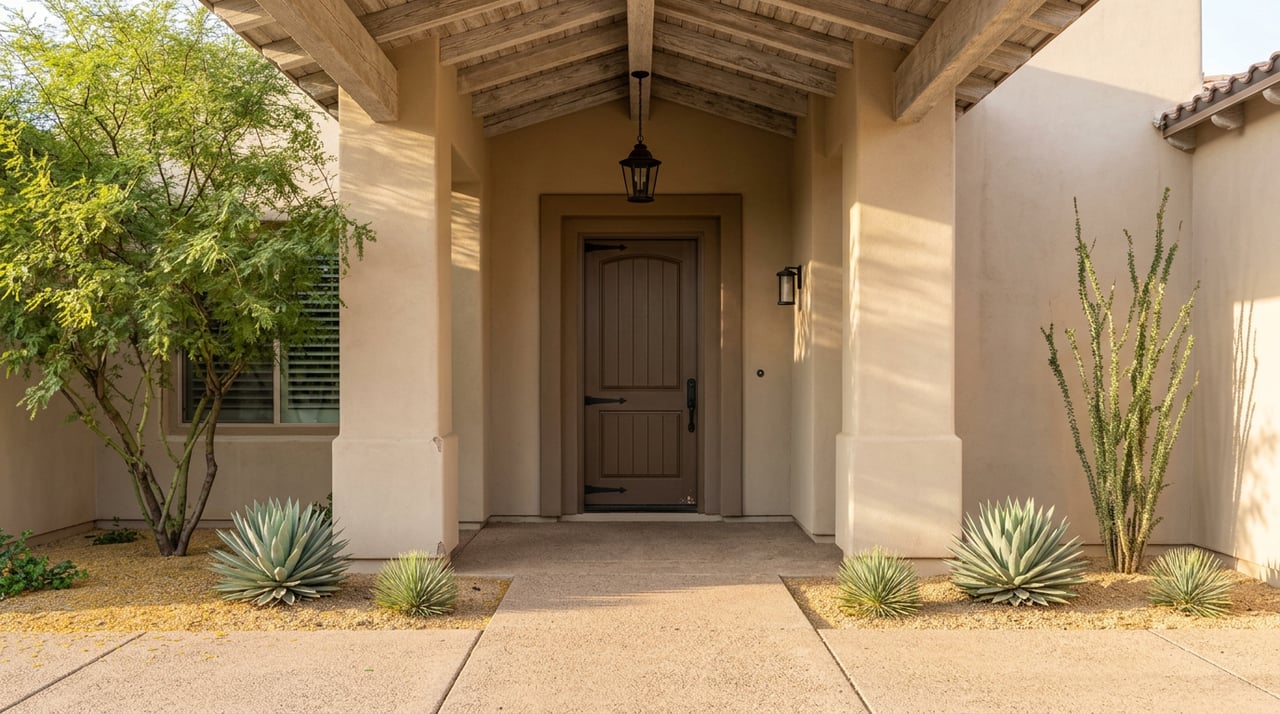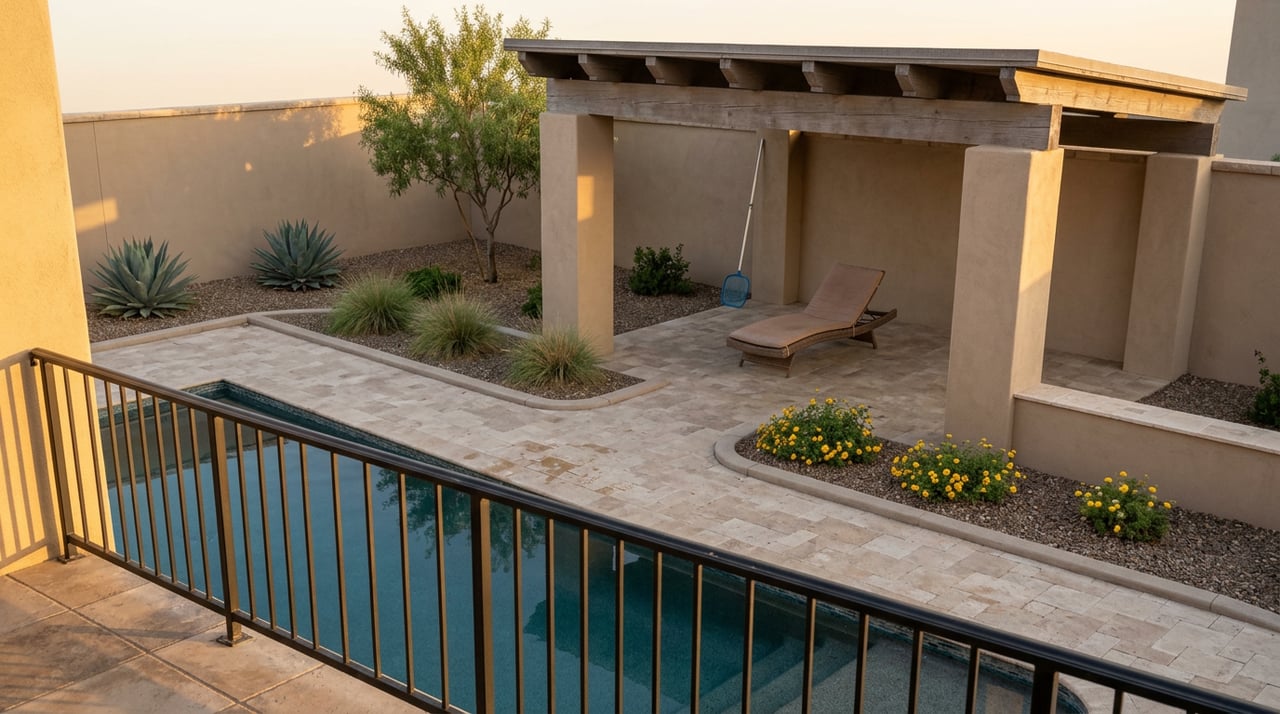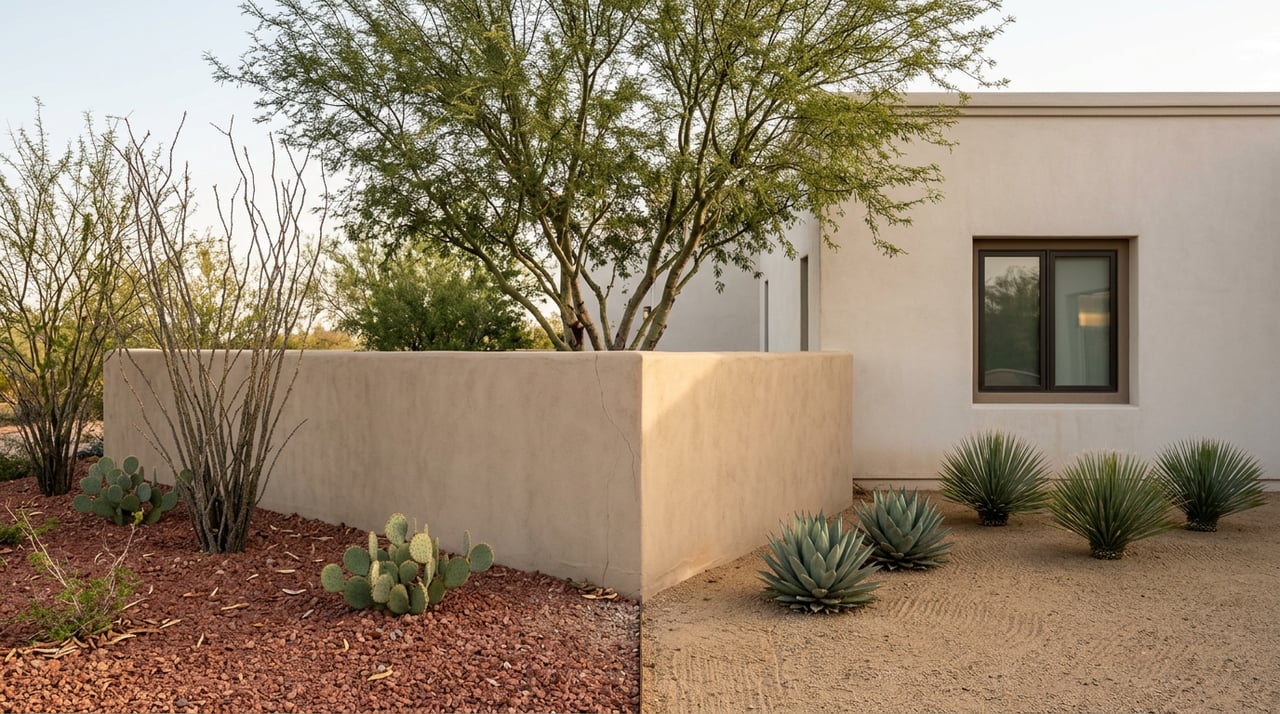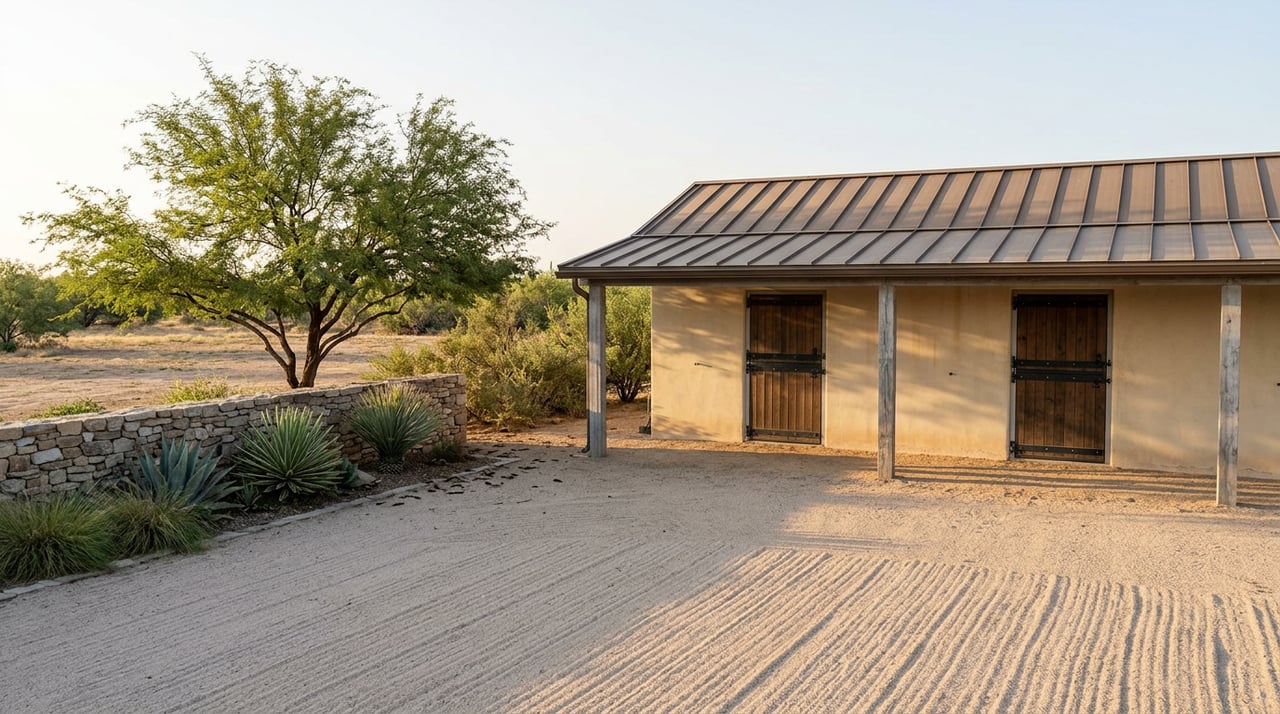
Two parcels sit within a few miles of each other outside Wittmann this fall. One is raw desert, priced under $10,000 an acre, sold with a note that a percolation test is already on file with Maricopa County. The other calls itself horse property: fenced, graded, with a well already drilled, and it prices out well north of $100,000 an acre. Same soil. Same mountain views. A gap that size isn't about dirt quality. It's about what someone already paid to make that dirt usable.
That gap is the real story for anyone shopping acreage in Wittmann right now, whether the plan is to buy raw land and build slowly or to sell a parcel and wonder why the listing three doors down commands triple the price per acre.
What "Per Acre" Actually Buys
Active land listings in and around Wittmann this fall show a wide spread depending on what category the parcel falls into. Raw, unimproved land averages roughly $39,500 an acre. Land marketed specifically as farmland, meaning it already has irrigation infrastructure or tillable ground, averages closer to $63,400 an acre. Land marketed as horse property, meaning fencing, graded pads, barns or arenas and usually a working well, averages roughly $122,700 an acre, more than triple the raw land figure.
That climb isn't random. It tracks almost exactly with how much someone already spent turning open desert into a usable homestead. A buyer comparing two listings by price per acre alone is really comparing a blank canvas to a finished room, and the paint, plumbing, and framing in between cost real money.
Water Is the Line Item the Listing Photo Doesn't Show
The single biggest variable in that gap is water. Wittmann sits outside any municipal water service area, so every home here depends on a private or shared well, and Arizona wells are not cheap. A complete residential well system, drilling through casing, pump, pressure tank, electrical hookup and permits, runs $25,000 to $45,000 installed in Arizona this year, and the Phoenix basin, which includes Wittmann, now averages 485 feet for a residential well. Depth is a big part of why: a homestead well drilled today commonly sits 60 to 120 feet deeper than the same property's well from the 1990s, as the regional water table continues to drop.
Some of the raw land listed this fall in Wittmann already carries a shared well, installed as recently as this spring, splitting that cost across two or more adjoining parcels. Others list with no well at all, meaning the buyer's real acquisition cost is the sale price plus whatever it takes to hit water, and nearby listings in the area cite well depths ranging from 300 to 600 feet down. On a five-acre lot priced at $47,000, a private well alone can cost as much as the land itself.
Two Zoning Codes, Two Different Ceilings
Not every acre in Wittmann carries the same building rights, and that shapes price too. Some parcels, including lots in the Whispering Ranch subdivision, are zoned R-190, meaning 190,000 square feet, close to 4.4 acres, per dwelling unit. Others nearby carry RU-43 zoning, which allows a custom home on lots closer to one acre. A buyer who wants five acres purely for horses might not care about the difference. A buyer thinking about eventually splitting a larger parcel, or building more than one structure, should, because the zoning code sets the ceiling on what that acreage can become long before any fencing goes up.
The Flight Path That Doesn't Show Up on a Map
A quieter friction shows up again and again in current Wittmann land listings. Several are marketed with a specific reassurance that the parcel sits outside Luke Air Force Base's Accident Potential Zone, commonly shortened to APZ. Land inside that zone carries documented restrictions on the type and density of development allowed, tied to the base's flight paths. Sellers outside the zone treat that fact as a selling point worth naming, which says something about how often it comes up in negotiations for buyers who haven't checked yet. Before treating a parcel's price as settled, anyone shopping acreage in this corridor should confirm APZ status the same way they'd confirm zoning, because it can determine what's buildable regardless of how many acres come with the deed.
A Parkway That Isn't Built Yet
One more detail matters before locking in a per-acre comparison. Several current listings mention the proposed Hidden Waters Parkway as a reason to expect future appreciation. That road does not exist yet. It shows up in listing copy as a forward-looking argument, not a completed improvement, and a buyer paying a premium today for proximity to a road that hasn't broken ground is making a bet on timing, not banking a certainty. That doesn't make the bet unreasonable. It just means the premium belongs in a different column than the well, the fence, and the zoning, which are facts on the ground today rather than plans for tomorrow.
What This Means If You're Comparing Wittmann to Wickenburg
Buyers cross-shopping this corridor often compare Wittmann's unincorporated acreage to horse property inside Wickenburg's town limits, and the comparison isn't apples to apples. Wickenburg's North acreage corridor, one of the few incorporated areas in Arizona where horse property still sits inside municipal boundaries, listed starting around $488,000 as of August 2026 for smaller improved lots, climbing past $2 million for larger working ranches. That starting price already assumes municipal infrastructure and improvements most Wittmann land doesn't have. Wittmann's lower entry price isn't a discount so much as a deferral. The buyer takes on the well, the septic or alternative system, and often the road maintenance directly, on their own timeline and their own budget.
Neither approach is right or wrong. One trades a higher sticker price for infrastructure already in place. The other trades a lower sticker price for control over exactly how and when that infrastructure gets built, at a cost the buyer sets rather than one baked into someone else's listing.
If You're Selling Raw Land Instead of Buying It
The same math runs in reverse for anyone selling unimproved acreage here. A parcel with a documented perc test on file, a shared or private well already drilled, and fencing already up isn't competing against every other raw lot at $39,500 an acre. It's competing closer to the farmland or horse property tier, because a buyer doesn't have to guess what it will cost to make the land usable. Documenting those improvements clearly, with receipts, permits, and well logs where available, is often worth more to the final sale price than any amount of staging.
A Few Straight Answers
Does every well in Wittmann need to be drilled from scratch? No. Some current land listings already include a shared or private well, sometimes installed within the past year, which removes a large chunk of that $25,000 to $45,000 system cost. Confirm well depth, share terms, and whether the well is properly registered before assuming it transfers cleanly with the sale.
How do I know if a parcel sits in Luke Air Force Base's Accident Potential Zone? Sellers and listing agents in this corridor frequently disclose APZ status directly because buyers ask about it, but confirm it independently before writing an offer, the same way you'd confirm zoning or floodplain status.
Is cheaper always better when comparing raw land by price per acre? Not by itself. A lower per-acre price on raw land can still cost more in total once well drilling, fencing, grading, and road access are added in. The only fair comparison is the finished product, not the empty lot.
Land math in Wittmann rewards patience and punishes assumptions. If you're weighing raw acreage against a horse-ready parcel, or trying to price land you already own for sale, Wendy Wright has spent years walking Wickenburg-area buyers and sellers through exactly this kind of comparison. Reach out for a straight read on what a specific parcel is really worth, well, fence, and zoning included.