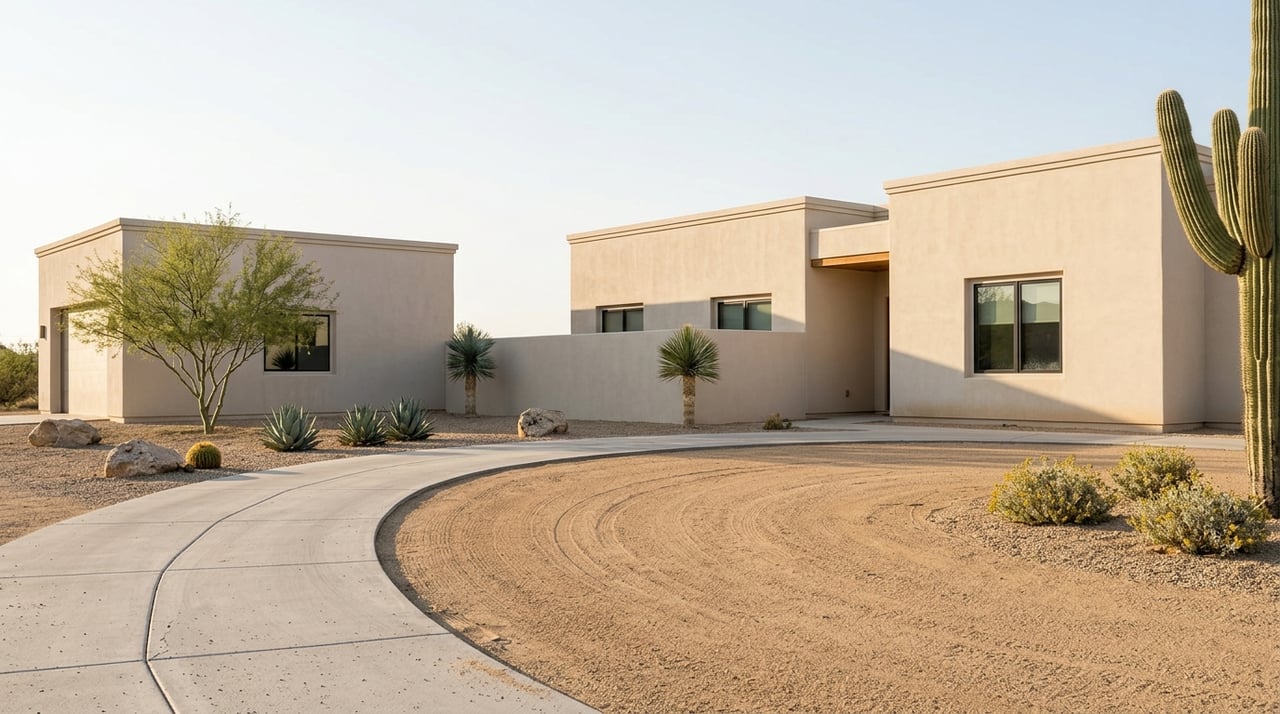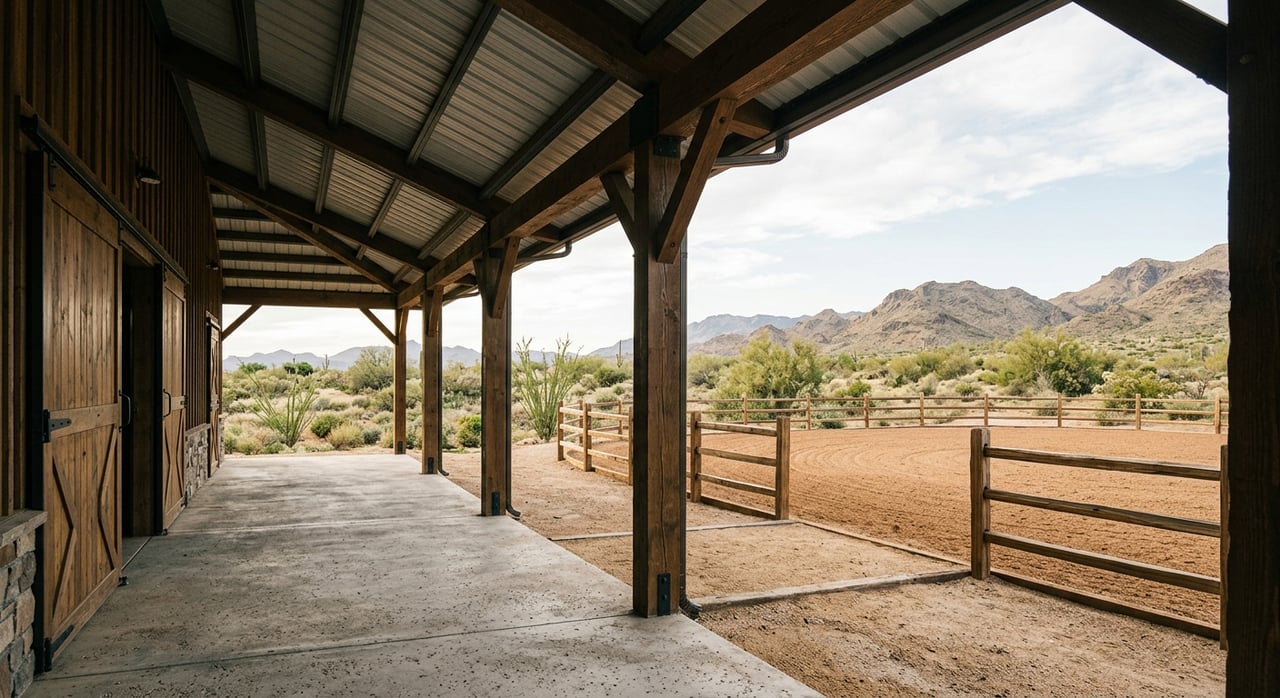
Buying horse property in Wittmann is not like buying a typical house with a big backyard. In many cases, the land will shape your day-to-day use far more than the home itself. If you want a property that truly works for horses, this guide will help you focus on the details that matter most before you commit. Let’s dive in.
Why the parcel matters most
When you shop for horse property in Wittmann, the house is only part of the picture. The parcel itself often drives the real value and usability, especially if you plan to keep horses, build facilities, or haul in and out with a trailer.
That means you need to look closely at zoning, water, septic, drainage, fencing, and access. A beautiful home on the wrong parcel can create expensive surprises later. A more modest home on the right parcel may be the better long-term fit.
Check zoning first
Zoning is one of the first things to confirm because it affects what the property can legally support. In unincorporated Maricopa County, rural districts have minimum lot sizes that commonly line up with the acre-plus parcels many horse buyers are already targeting.
For example, RU-43 requires at least 43,560 square feet and 145 feet of lot width. RU-70 requires 70,000 square feet and 250 feet of width, while Rural-190 requires 190,000 square feet and 300 feet of width.
These standards help explain why horse-property searches in Wittmann often center on larger lots. If you are comparing properties, it is smart to confirm the zoning district early instead of assuming every rural parcel allows the same setup.
Private horse keeping vs business use
Maricopa County allows limited equestrian uses as an accessory to a single-family residence in rural districts. That can work well if your plan is private horse keeping tied to the home.
The rules change if your plans go beyond that. Boarding, lessons, horse rentals, off-site trail staging, or event-style uses may fall outside the accessory-use category and may require a special use permit.
The county also caps accessory boarding at up to five horses not owned by the property owner or resident. Non-commercial public activities are limited to a maximum of 24 people, so larger gatherings or operation-style uses need a closer review.
Acreage can change the conversation
Some larger agricultural equine operations may qualify for a county agricultural exemption on at least five contiguous commercial acres. Still, the county says arenas and rodeo-style structures, mounted cowboy shooting, riding lessons, and horse rentals or staging are not exempt from zoning requirements.
In plain terms, you should be clear about your intended use before you buy. A parcel that works for personal horses may not work the same way for a business plan.
Understand water before closing
Water is one of the biggest practical questions with rural property. In Wittmann, you should verify whether the parcel has its own well, uses a shared well, or may need a new well process.
The Arizona Department of Water Resources regulates groundwater wells statewide. Before drilling a new well or modifying an existing one, a Notice of Intent to Drill must be filed.
For domestic use on parcels of five acres or less, the county or local health authority must review the application first. That makes timing and paperwork important if your purchase depends on future water improvements.
Shared wells need close review
Shared wells can work, but they come with private agreements that deserve careful attention. Maricopa County says shared-well agreements must be recorded and include the legal description, easements, ownership details, cost sharing, and a survey map.
The county also notes that a private shared well may serve no more than 15 lots or houses. Just as important, disputes over shared wells are private matters, not something the state water agency manages for owners.
That means you should read the agreement closely and understand who pays for what. You also want to know how access, maintenance, and future repairs are handled before you move forward.
Potable water is not guaranteed
Maricopa County treats private wells and water storage tanks as accessory uses in most cases. The county also warns that it does not guarantee potable water at a site.
That is an important reality check for buyers. Even if a property has a well setup in place, you still need to verify the details that matter to your intended use.
Nearby well data can help
If you want more context on water reliability, ADWR provides public tools such as the Wells 55 Map and Groundwater Site Inventory. These can help you review nearby well data, including depth to water and historic well information.
For horse buyers, that extra research can be useful when comparing parcels with similar price points but different water situations. It is one more way to avoid making assumptions based only on the listing description.
Review septic and site layout
Septic is another major part of the due diligence process for horse property. In Maricopa County, Environmental Services reviews plans, performs inspections, and issues permits for water and wastewater-related activities.
On resale, the onsite wastewater system must be inspected within six months before transfer. After closing, the buyer must submit a notice of transfer within 15 days.
Septic and well placement work together
Shared-well and septic layouts should be reviewed together, not separately. County guidance says site plans should show the water connection and onsite wastewater system.
The county also notes septic setbacks of more than 100 feet from any well and more than 50 feet from a property line unless Environmental Services approves otherwise. Those distances can affect where future improvements may go.
If you are hoping to add a barn, arena, guest structure, or other site features later, the existing septic and water layout could limit your options. That is why the site plan matters as much as the home itself.
Plan for barns, sheds, and arenas
Many buyers assume they can add horse improvements later without much trouble. In reality, you need to check permits, setbacks, and lot coverage before deciding a parcel has room for everything you want.
Maricopa County requires building permits for all structures except those under 200 square feet with no electrical, plumbing, or mechanical service. Detached accessory buildings can generally have a minimum 3-foot setback in side or rear yards, but they cannot occupy more than 30% of the required rear or side yard.
Covered structures affect lot coverage
Roofed structures count toward lot coverage. That includes features like barns, loafing sheds, and covered arenas.
So even if a parcel looks open enough, the numbers still need to work. It is worth checking this before you assume a future build plan will fit.
A flat dirt lot is not an arena
If you plan to build an arena, round pen, or dry lot, soil and drainage deserve real attention. The NRCS Web Soil Survey provides parcel-specific soil data, which can help you understand what you are working with.
Extension guidance also makes clear that there is no one perfect footing for every use. Surface, base, and sub-base all matter, and topsoil is generally considered a poor footing material because it compacts and can become slippery when wet.
For Wittmann buyers, the practical takeaway is simple. A level piece of dirt is not automatically a usable arena site.
Look at fencing, gates, and drainage
Fencing is another detail that seems simple until it is not. In rural districts, corrals are a permitted use, and pipe-rail or wire-strand fencing without attached mesh generally does not need drainage clearance.
But some fences and walls do trigger county review. That includes fencing that affects runoff, fencing in a Special Flood Hazard Area, and many taller or more complex walls.
Easements can affect fence placement
Fence and gate placement also must respect easements and right-of-way areas. Maricopa County says fences and walls cannot be placed within easements or private access easements.
The county also notes that gates across easements are checked for drainage impacts, not access rights. That means you should not assume an existing or planned gate setup is automatically fine from every standpoint.
If the property is not part of a recorded subdivision, county Planning and Development does not keep easement records for individual lots. In that case, a surveyor, title report, or recorder records may be needed to confirm what is actually allowed.
Make sure trailer access works
Trailer access can make or break a horse property, especially if you haul often. A parcel may look accessible on paper but still create headaches for turning, backing, or safe entry from the road.
In unincorporated Maricopa County, all new private roads require a permit. County driveway guidelines call for drainage-safe connections, driveway widths of 12 to 24 feet, minimum 18-inch culverts when used, and turnaround space for driveways serving arterial or major collector roads.
Dirt-road changes may need review
If the property uses a private dirt road, some routine maintenance may be allowed without a permit if the work does not change historic drainage patterns. If drainage changes, the county may require permitting.
That matters if you are planning upgrades to improve trailer movement. Before you count on widening or reworking access, it is wise to verify what the county may require.
Use county mapping tools
One of the best ways to start your due diligence is with Maricopa County’s public parcel tools. The county’s Interactive Parcel Maps page links to PlanNet for zoning, annexations, floodplain, and other delineations.
It also connects buyers to historical permit records, zoning setback information, county GIS maps, Assessor parcel mapping, Flood Control GIS, and permit and code map viewers. If a parcel borders public land, the State Land Department GIS resource can also be useful.
Another key point is jurisdiction. If a nearby property sits inside a town or city rather than unincorporated county land, Maricopa County says the permitting process starts with that city or town instead.
A smart Wittmann buyer checklist
Before you buy horse property in Wittmann, it helps to slow down and review the parcel like a working property, not just a home.
Here is a practical checklist based on county and state guidance:
- Confirm the zoning district and any overlays
- Verify whether the property has a private well, shared well, or future well needs
- Review the shared-well agreement if one exists
- Pull septic transfer and inspection records
- Check site layout for septic and well setbacks
- Review floodplain status and drainage concerns
- Confirm driveway, private-road, and trailer-access details
- Check barn, corral, fence, and setback requirements
- Review easements before planning gates or access changes
- Verify soils before committing to an arena layout
- Clarify whether your use is private horse keeping or something that may require special approval
Why local guidance matters
Horse property purchases have more moving parts than many buyers expect. In Wittmann, the right fit often comes down to how the parcel functions in real life, not how it photographs online.
That is where local experience can save you time and stress. When you work with someone who understands acreage, equestrian property, and rural due diligence, you are better positioned to spot red flags early and ask smarter questions before closing.
If you are exploring horse property in Wittmann or nearby rural communities, Wendy Wright can help you evaluate the land, the use, and the practical details that matter most.
FAQs
What zoning should you check for horse property in Wittmann?
- You should confirm the parcel’s zoning district, minimum lot size, lot width, and whether your intended use is private horse keeping or something broader like boarding, lessons, rentals, or events.
What should you know about shared wells on Wittmann horse property?
- Shared wells rely on private recorded agreements that should spell out legal descriptions, easements, ownership, and cost sharing, and the county says a private shared well may serve no more than 15 lots or houses.
What septic rules matter when buying horse property in Wittmann?
- In Maricopa County, the onsite wastewater system must be inspected within six months before resale transfer, and septic placement should be reviewed with well setbacks and the full site plan in mind.
Can you build a barn or covered arena on any Wittmann horse parcel?
- Not automatically, because building permits, setbacks, lot coverage, and existing site constraints all need to be checked before assuming horse structures will fit.
Why does trailer access matter for horse property in Wittmann?
- Trailer access affects how easily you can enter, turn, back, and exit the property, and private-road or driveway changes may involve county drainage and permitting requirements.
How can you research a Wittmann horse property before making an offer?
- You can review Maricopa County parcel maps, zoning and floodplain tools, permit history, septic records, well information, easements, and soil data to better understand how the parcel may function.